

The Voidness Review
The Voidness

Release: October 30, 2023
Publisher: Steelkrill Studios
Developer: Steelkrill Studios
Genre:
PEGI: 16
Comments:
The Voidness by Steelkrill Studio is not your typical horror game. It doesn’t rely on grotesque monsters jumping out from behind corners or cheap tricks to make you flinch. Instead, it strips away one of the most fundamental senses in gaming—sight—and forces you to navigate a world where darkness is absolute and sound can be your undoing. The result is an experience that feels both claustrophobic and vast, intimate and cosmic, and above all, deeply unsettling.
You step into the role of Francesca Lee, a space specialist sent to investigate a mysterious phenomenon on the planet Tenebris. The mission is simple on paper: study the Void, a region consumed by impenetrable darkness. But when everything goes wrong, Francesca finds herself stranded, cut off from her team, and surrounded by an environment that feels alive in its hostility. The story unfolds slowly through environmental clues, scattered audio logs, and chilling fragments of dialogue that hint at something far bigger—and far more terrifying—than a simple scientific anomaly.
What makes the narrative compelling is its restraint. There are no lengthy cutscenes or exposition dumps. Instead, the game trusts you to piece together the truth, and that sense of discovery makes every revelation hit harder. The tone leans heavily into cosmic horror, evoking the same existential dread you’d find in Lovecraftian fiction. By the time the credits roll, you’re left with more questions than answers—and that ambiguity is part of what makes the experience so haunting.
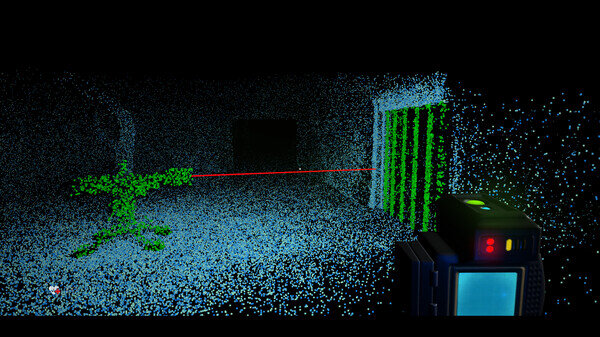
The heart of The Voidness lies in its LIDAR scanning mechanic. With no natural light, your only way to “see” is by firing pulses from a range-finder device that maps the environment in stark, wireframe outlines. It’s a mechanic that feels both innovative and terrifying. Every scan illuminates your surroundings for a fleeting moment, but it also risks alerting the horrors lurking in the dark. This constant trade-off—between the safety of knowledge and the danger of exposure—creates a tension that never lets up.
Movement is slow and deliberate. You’ll creep through narrow corridors, activate scanning turrets, and solve environmental puzzles that often require you to think under pressure. Oxygen management and stamina limitations add another layer of stress, forcing you to plan your actions carefully. And then there’s the sound system: enemies react to noise, including your footsteps and even your microphone input while hiding. Breathing too loudly in real life can give you away. It’s a feature that blurs the line between player and character, making you hyper-aware of your own presence in the real world.
If there’s one area where The Voidness excels beyond question, it’s atmosphere. The game’s environments are oppressive, alien, and eerily beautiful in their minimalism. The darkness isn’t just a backdrop—it’s a character in its own right, an ever-present force that shapes every decision you make. The LIDAR visuals, with their stark, skeletal outlines, turn every scan into a moment of dread. You never know what shape might emerge from the void, and that uncertainty is far scarier than any jump scare.
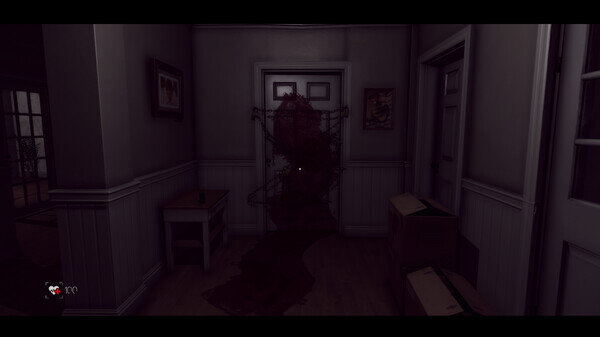
Sound design is equally masterful. The hum of your scanner, the distant thud of something moving in the dark, the distorted whispers that seem to come from nowhere—all of it combines to create an audio landscape that’s as terrifying as it is immersive. Silence becomes its own kind of horror, a void that feels heavier than any noise.
For an indie title built on Unity, The Voidness is impressively polished. It supports 4K resolution, adjustable FOV, and high frame rates, and it runs smoothly on mid-range hardware. There are some minor issues—occasional stutters during heavy scanning sequences and inconsistent controller support—but nothing game-breaking. The PS4 controller layout works better than Xbox, which is worth noting if you prefer gamepads over keyboard and mouse.
As innovative as the LIDAR mechanic is, it can become repetitive during longer sessions. The visual style, while striking, offers limited variety, and the game’s short runtime—roughly four to six hours—may leave some players wanting more. Accessibility options are minimal, and a few text errors slip through, though these are minor blemishes on an otherwise ambitious experience.
The Voidness is a rare kind of horror game—one that doesn’t just scare you, but unsettles you on a deeper level. It’s a bold experiment that trades traditional visuals for a mechanic that makes darkness terrifying again. While its minimalist approach and deliberate pacing won’t appeal to everyone, those who appreciate atmospheric, experimental horror will find it unforgettable. Steelkrill Studio has crafted something special here: a game that feels both intimate and cosmic, a chilling meditation on isolation and the fear of the unknown.

